IMAGE CREATION / PAINTERLY CHARACTER PORTRAIT
CIRCULAR
CONCEPT
PORTRAIT.
A familiar face. A painted circle. A silhouette that becomes brushwork.
Turn your character sheet into a three-quarter bust portrait with sharp facial detail, tactile materials, a muted circular backdrop, and expressive edges that dissolve into aged art paper.
GET THE PROMPT ↓THE FINISHED LOOK
02 EXAMPLESOne presentation, two distinct characters. Select an image to view the original at full size.
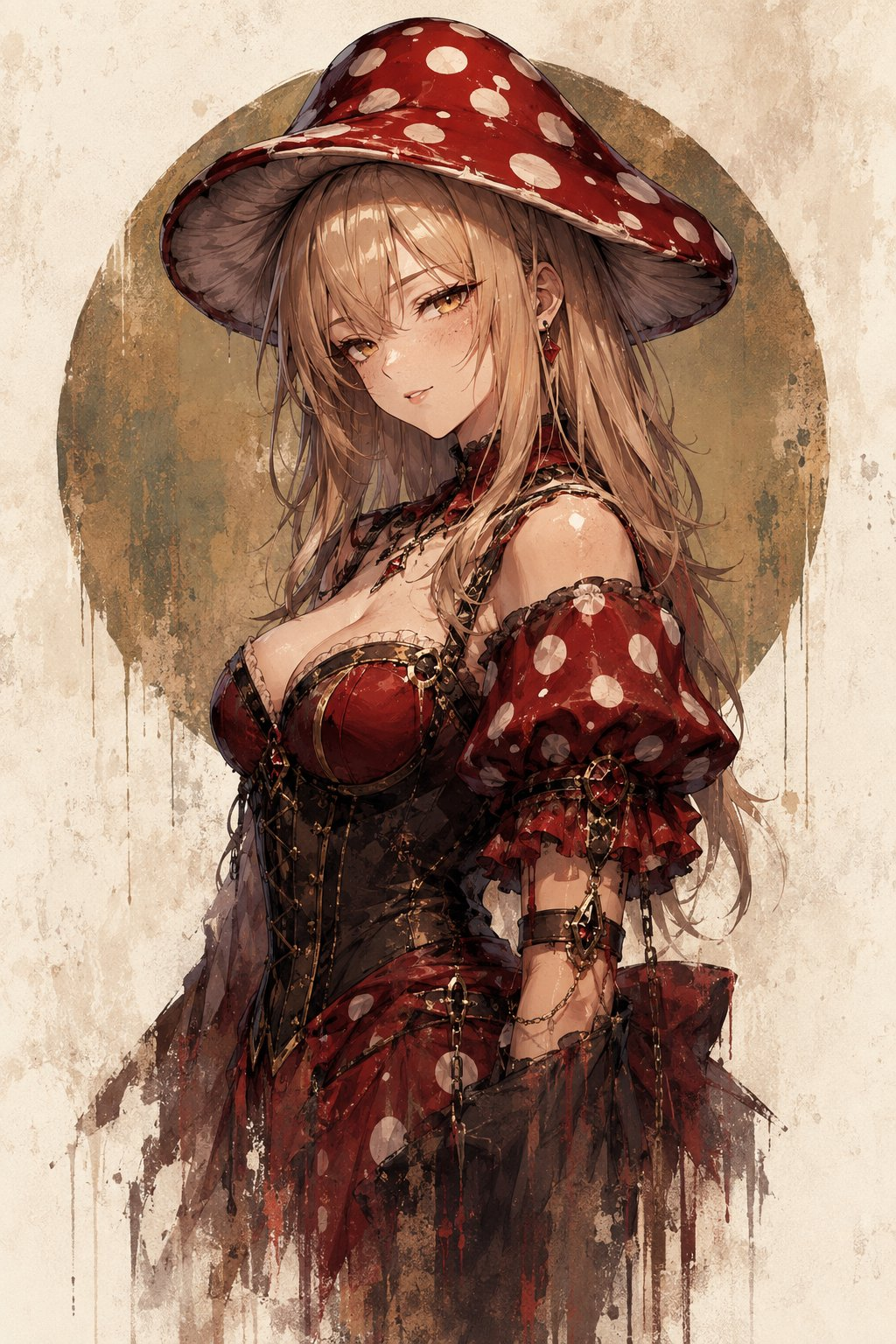
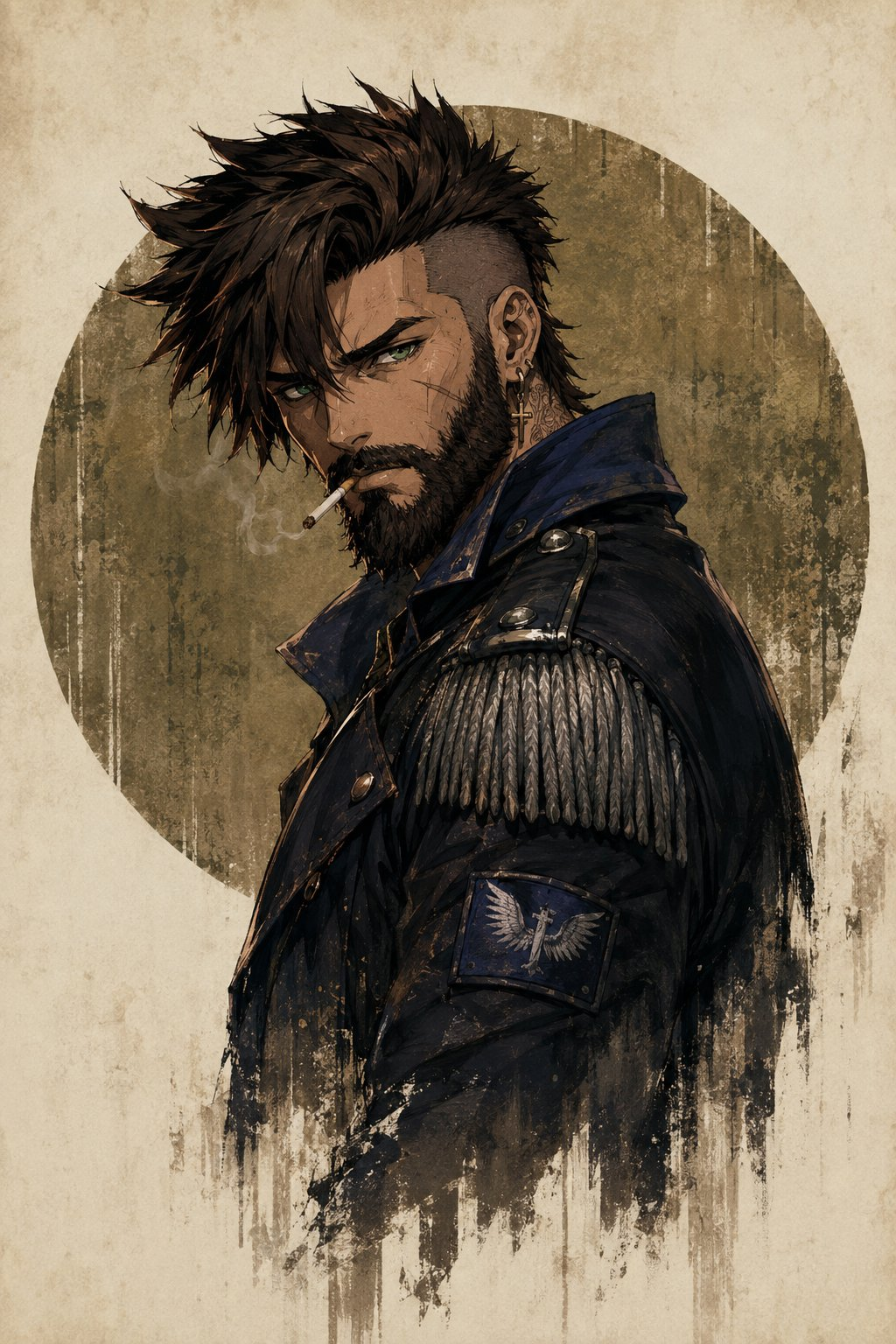
BEFORE YOU CREATE
KEEP THE CHARACTER. PAINT THE PRESENTATION.
- Attach your character sheet. Supply the reference that defines the character's face, clothing, markings, and accessories.
- Copy the complete prompt. No composition reference is required. The prompt defines the pose, circle, lighting, and painterly treatment.
- Create the portrait. Paste the prompt with the sheet into your image generation chat. The character keeps their established design; masks, cybernetics, and equipment only appear when supported by the sheet.
THE COMPLETE PROMPT
ORIGINAL TEMPLATEThe full original prompt, ready to use with your character sheet.
Read the complete prompt
MASTER IMAGE-GENERATION PROMPT — POST-APOCALYPTIC CYBERPUNK BUST PORTRAIT / CIRCULAR BACKDROP / CHARACTER-SHEET LOCK

Use the supplied CHARACTER SHEET as the absolute and only visual authority for the character.

Create ONE highly polished, stylized, hand-painted semi-realistic anime / graphic-novel character portrait presented as a three-quarter-view upper-body bust illustration with a minimalist concept-art presentation.

There is NO composition reference image.

The complete composition, pose, framing, background treatment, lighting, painting style, crop, and visual presentation are defined by this prompt.

The finished artwork should resemble premium dystopian character concept art: elegant, gritty, painterly, slightly post-apocalyptic, fashion-forward, and highly character-focused.

⸻

CORE PRIORITY

CHARACTER IDENTITY = LOCKED TO THE CHARACTER SHEET

PORTRAIT COMPOSITION / CAMERA / POSE / BACKDROP / PAINTERLY PRESENTATION = LOCKED TO THIS PROMPT

Follow this hierarchy:

LOCK CHARACTER
→ PRESERVE CHARACTER DESIGN
→ PLACE CHARACTER INTO DEFINED PORTRAIT
→ ADAPT COSTUME DETAILS NATURALLY
→ APPLY CONCEPT-ART PRESENTATION
→ FINAL CHARACTER FIDELITY CHECK

Do not redesign the character merely to make them fit the aesthetic.

The subject must remain immediately recognizable as the exact character shown on the supplied CHARACTER SHEET.

⸻

1. CHARACTER SHEET — ABSOLUTE AUTHORITY

Preserve exactly:

* apparent adult age
* face shape
* facial proportions
* jawline
* cheek structure
* nose
* lips
* eyebrows
* eye shape
* iris color
* pupil characteristics
* skin tone
* freckles
* scars
* tattoos
* facial markings
* hairstyle
* hairline
* bangs
* parting
* hair length
* hair volume
* hair texture
* hair color
* body type
* shoulder width
* neck proportions
* established clothing
* jewelry
* piercings
* necklaces
* straps
* harnesses
* armor
* gloves
* signature accessories
* supernatural traits
* established weapons or equipment

If multiple views are included on the CHARACTER SHEET, combine them to understand the full design.

Do not simplify signature details.

Do not substitute generic clothing.

Do not alter the character’s face into a generic anime face.

Do not change eye color.

Do not change hairstyle.

Do not remove tattoos, scars, or defining markings.

Do not make the character younger or older.

Do not significantly alter their body type.

⸻

2. GENERAL COMPOSITION

Create a vertical portrait illustration.

Recommended aspect ratio:

2:3 vertical

Frame the character from approximately:

upper chest / mid-torso upward

The character occupies roughly 60–70% of the image height.

Position the character slightly off-center, with the body angled diagonally through the composition.

The portrait should feel like a finished character-concept painting rather than a conventional photograph.

The lower torso should gradually dissolve into loose painterly strokes instead of ending with a hard crop.

⸻

3. CHARACTER ORIENTATION

Place the character in a three-quarter view.

Body:

approximately 35–45 degrees turned away from the camera.

Head:

turned slightly back toward the viewer.

This creates a pose where:

* one shoulder is closer to camera
* the far shoulder recedes
* the neck remains clearly visible
* the face is mostly readable
* the character appears alert and self-possessed

The pose should feel composed, confident, guarded, and slightly dangerous.

Avoid a straight-on passport-photo pose.

⸻

4. HEAD POSITION & GAZE

Keep the head upright or very subtly tilted.

The face should turn toward the viewer enough for both eyes to remain visible whenever the character design allows it.

Eyes should look:

directly toward the viewer or just slightly past the camera

The gaze should communicate:

* confidence
* suspicion
* calm threat
* intelligence
* hardened experience

Avoid exaggerated emotion.

The expression should generally remain controlled and serious unless the character sheet strongly suggests otherwise.

⸻

5. FACIAL EXPRESSION

Use a restrained expression.

Recommended emotional tone:

calm, hardened, observant, slightly intimidating

Features:

* relaxed but alert brow
* focused eyes
* minimal smile
* neutral or lightly tense mouth
* subtle jaw tension

The character should feel like someone accustomed to dangerous environments.

Do not create a cheerful fashion-model expression.

Do not exaggerate anger.

⸻

6. HAIR PRESENTATION

Preserve the exact hairstyle from the CHARACTER SHEET.

However, give the hair slightly heightened concept-art drama through:

* visible individual strands
* painterly highlights
* controlled flyaway hairs
* strong silhouette
* directional flow
* sharp edge lighting

If the character has long, spiked, vertical, windswept, braided, undercut, or otherwise distinctive hair, emphasize its silhouette.

Do not replace the hairstyle with a mohawk unless the character sheet actually contains one.

Character identity has priority over the reference aesthetic.

⸻

7. COSTUME PRESENTATION

Use the character’s established outfit from the supplied CHARACTER SHEET.

Render clothing and equipment with a slightly dystopian / survivalist concept-art treatment through realistic material rendering rather than redesign.

Emphasize existing:

* straps
* harnesses
* buckles
* armor sections
* belts
* metal hardware
* necklaces
* shoulder pieces
* tactical details
* worn fabric
* mechanical accessories

Materials should feel tactile and weathered.

Possible textures:

* distressed leather
* oxidized metal
* brushed steel
* canvas
* rubber
* worn cotton
* scratched polymer
* tarnished brass
* woven straps

Do not randomly add equipment merely to make the character more cyberpunk.

If the CHARACTER SHEET already contains armor or mechanical equipment, emphasize it.

⸻

8. OPTIONAL RESPIRATOR / MASK RULE

If the character sheet includes:

* respirator
* gas mask
* mechanical mask
* breathing apparatus
* face armor
* cybernetic mouth covering

preserve it exactly.

Render it prominently with:

* visible vents
* layered metal
* tubing
* fasteners
* scratched material
* believable mechanical construction

If the character sheet does not include a respirator or face covering:

DO NOT add one.

The image composition should still work without it.

Character identity overrides aesthetic motifs.

⸻

9. SHOULDER DETAIL

The shoulder closest to the camera should become an important secondary focal point.

If the character has:

* armor
* tattoos
* scars
* cybernetics
* insignia
* cloth layering
* jewelry
* chains
* mechanical components

show them prominently on the forward shoulder.

The near shoulder may project slightly toward camera to create depth.

Use strong overlapping forms between:

face → neck → shoulder → torso

⸻

10. SILHOUETTE

Create a strong silhouette.

The outline of the character should be immediately readable against the background.

Important silhouette areas:

* hair
* forehead
* face
* neck
* shoulders
* armor
* straps
* hanging cloth
* accessories

Allow occasional painterly edges to break apart into the background.

This is especially important near the lower torso.

⸻

11. CIRCULAR BACKDROP

Behind the character place ONE large muted circular shape.

The circle should occupy approximately:

65–75% of the width of the image

Position it behind the character’s:

* head
* shoulders
* upper torso

The circle should feel like an abstract painted graphic rather than a physical object.

Its edges should remain mostly clean but subtly textured.

Color:

muted earth-tone or desaturated industrial tone such as:

* warm beige
* aged ochre
* pale rust
* muted olive
* dusty tan
* desaturated green-gray

Do not make the circle bright or saturated.

The circle exists primarily to frame the character silhouette.

⸻

12. CIRCLE TEXTURE

Inside the circular backdrop, use subtle painterly textures such as:

* vertical weathering
* faint stains
* aged wall texture
* faded industrial marks
* soft scratches
* muted tonal streaking
* thin drips
* distressed paint

Keep these subtle.

The character must remain dominant.

⸻

13. OUTER BACKGROUND

Outside the circle, use a very pale warm neutral field.

Ideal colors:

* ivory
* parchment
* pale cream
* warm off-white
* extremely light beige

The background should feel like:

aged concept-art paper

rather than a digital gradient.

Add extremely subtle:

* paper texture
* pigment variations
* stains
* cloudy wash
* faint watercolor edges

Do not create a detailed physical environment.

The composition should remain intentionally minimalist.

⸻

14. PAINTERLY LOWER EDGE

This is a critical feature.

The bottom of the character should not end with a photographic crop.

Instead, allow the chest / torso / clothing to gradually dissolve downward into:

* loose brushstrokes
* tapered pigment
* unfinished edges
* streaking paint
* fragmented fabric forms
* dripping shapes
* sketch-like abstraction

The lower body should appear partially unfinished in an intentional concept-art manner.

This effect should feel elegant rather than damaged.

Maintain enough structure that the torso remains readable before dissolving.

⸻

15. PAINTERLY SIDE EDGES

Certain outer edges may also partially break into expressive brushwork.

Possible areas:

* shoulder armor
* hanging fabric
* chains
* hair tips
* clothing edges
* equipment

Use a mixture of:

sharp focal edges

and

soft lost edges

to create traditional illustration depth.

⸻

16. LIGHTING

Use soft directional studio-style concept-art lighting.

Primary illumination:

soft warm-neutral light from the upper front / side

Add subtle rim illumination to help separate:

* hair
* cheek
* shoulders
* mechanical equipment

Keep lighting natural and painterly.

Avoid extreme neon unless the character sheet contains luminous elements.

No cinematic rainbow lighting.

No unnecessary blue/red split lighting.

⸻

17. FACE LIGHTING

The face is the primary focal point.

Maintain:

* readable eye sockets
* clear eye color
* subtle nose highlight
* cheek structure
* realistic skin transitions
* dimensional lips
* controlled shadow beneath jaw

If the character wears a mask, ensure visible facial areas remain readable.

Eyes should remain especially sharp.

⸻

18. COLOR PALETTE

Use a restrained palette.

Dominant colors should come directly from the CHARACTER SHEET.

Surrounding tones should remain:

* warm neutrals
* rust
* dusty beige
* faded olive
* brown
* muted charcoal
* oxidized metal tones

Allow character-specific accent colors to stand out naturally.

Examples could include:

* turquoise markings
* red hair
* violet eyes
* metallic gold
* crimson clothing
* blue accessories

Do not recolor the character simply to match the backdrop.

⸻

19. MATERIAL RENDERING

Render different materials distinctly.

Metal:

* reflective but worn
* scratched
* slightly oxidized
* strong highlights

Leather:

* matte
* wrinkled
* cracked
* slightly reflective along raised edges

Fabric:

* soft
* frayed
* folded
* irregular

Skin:

* naturally textured
* softly luminous
* not plastic

Hair:

* sharp grouped strands
* painterly highlights
* dimensional volume

⸻

20. ARTISTIC STYLE

Render the image as:

high-end hand-painted semi-realistic anime / dystopian graphic-novel concept art

Combine:

* realistic anatomy
* stylized facial construction
* expressive brushwork
* visible painterly texture
* crisp focal details
* loose peripheral strokes
* traditional concept-art presentation
* atmospheric color washes
* subtle watercolor / gouache influence
* polished digital painting

The result should look like a professional character-design illustration created for:

* an RPG
* graphic novel
* dystopian anime
* premium tabletop game
* AAA game concept-art book

⸻

21. DETAIL HIERARCHY

Maximum sharpness:

1. eyes
2. face
3. facial markings
4. mask or eyewear if present
5. hair near face
6. near shoulder
7. important accessories

Medium detail:

* torso
* armor
* fabric
* straps
* mechanical components

Lower detail:

* bottom brushwork
* circle texture
* outside background

⸻

22. DEPTH

Despite the minimalist backdrop, preserve clear depth.

The visual order should read:

foreground shoulder / accessories

→ face

→ rear shoulder

→ large painted circle

→ pale paper background

Use overlapping shapes and controlled edge softness to reinforce this depth.

⸻

23. ACCESSORY MOTION

If the character has:

* chains
* earrings
* hanging straps
* necklaces
* tubes
* cables
* cloth strips

allow them to hang naturally with gravity.

Some may extend slightly beyond the main silhouette.

Do not produce physically impossible tangles.

⸻

24. CHARACTER-SPECIFIC ADAPTATION

The portrait aesthetic must adapt around the character instead of forcing the character into a predetermined design.

For example:

If the character is gothic:
allow the painting to feel darker and more elegant.

If futuristic:
emphasize mechanical materials.

If military:
emphasize tactical wear and weathered gear.

If supernatural:
allow subtle supernatural effects.

If clean-cut:
keep clothing clean instead of artificially damaging it.

If aristocratic:
allow richer material rendering.

The composition remains locked, but the character’s own visual identity determines the specific details.

⸻

25. DO NOT GENERICIZE

Do NOT automatically turn every supplied character into:

* punk
* cyberpunk
* raider
* wasteland survivor
* mohawk character
* gas-mask wearer

Those features only appear if supported by the CHARACTER SHEET.

What is locked from this composition is:

* upper-body portrait
* three-quarter pose
* minimalist circular backdrop
* pale paper exterior
* painterly rendering
* dissolving lower torso
* muted concept-art presentation
* highly detailed face
* near-shoulder emphasis

NOT the original character’s individual design.

⸻

26. ANATOMY QUALITY CONTROL

Ensure:

* proper shoulder attachment
* natural clavicles
* believable neck
* correct ear placement
* correct facial perspective
* both eyes aligned correctly
* believable torso rotation
* physically accurate straps
* realistic jewelry attachment
* correct mask placement
* equipment aligned with body anatomy

No floating accessories.

No duplicated jewelry.

No malformed shoulder armor.

No broken neck pose.

⸻

27. CHARACTER FIDELITY CHECK

Before finishing, compare the subject against the supplied CHARACTER SHEET.

Verify:

* same person
* same face
* same eyes
* same hairstyle
* same hair color
* same skin
* same markings
* same scars
* same outfit
* same accessories
* same body structure
* same apparent age

If there is conflict between this prompt’s visual style and the character sheet:

THE CHARACTER SHEET WINS.

⸻

28. NEGATIVE CONSTRAINTS

DO NOT:

* copy another character’s facial features
* invent a mohawk
* invent a respirator
* invent cybernetics
* change hairstyle
* change eye color
* remove tattoos
* invent tattoos
* change apparent age
* alter ethnicity
* significantly change body type
* replace signature clothing
* add random futuristic equipment
* make the background a detailed city
* create a full-body portrait
* place the character far away
* use photorealism
* use chibi style
* use simplistic cel shading
* make the image look like a 3D render
* use glossy plastic skin
* use generic fantasy armor
* overcrowd the background
* add text
* add logos
* add borders
* add watermarks

⸻

FINAL DIRECTIVE

Create ONE polished vertical character portrait featuring the exact character from the supplied CHARACTER SHEET.

Show the subject from approximately the upper chest upward in a strong three-quarter pose, body turned away slightly while the head looks back toward the viewer.

Place one large muted, weathered circular graphic behind the head and shoulders.

Surround the circle with a pale ivory / parchment-like background.

Render the character with rich semi-realistic painterly detail while allowing the lower torso, fabric, equipment, and peripheral edges to gradually dissolve into expressive vertical brushstrokes.

Maintain exceptionally strong facial likeness and character-sheet fidelity.

The final image should feel like a finished dystopian RPG character-concept painting displayed on aged art paper:

minimalist,
painterly,
stylized,
gritty,
elegant,
character-driven,
and professionally illustrated.

CHARACTER SHEET = ABSOLUTE IDENTITY AUTHORITY.

THIS PROMPT = ABSOLUTE COMPOSITION AUTHORITY.

DO NOT COPY THE EXAMPLE CHARACTER’S DESIGN ELEMENTS.

RECREATE THE PRESENTATION STYLE AND COMPOSITION WITH THE NEW CHARACTER INSTEAD.