IMAGE CREATION / TWO CHARACTER SCENE
DARK FANTASY
ENCOUNTER.
Two characters. One moment suspended in the mist.
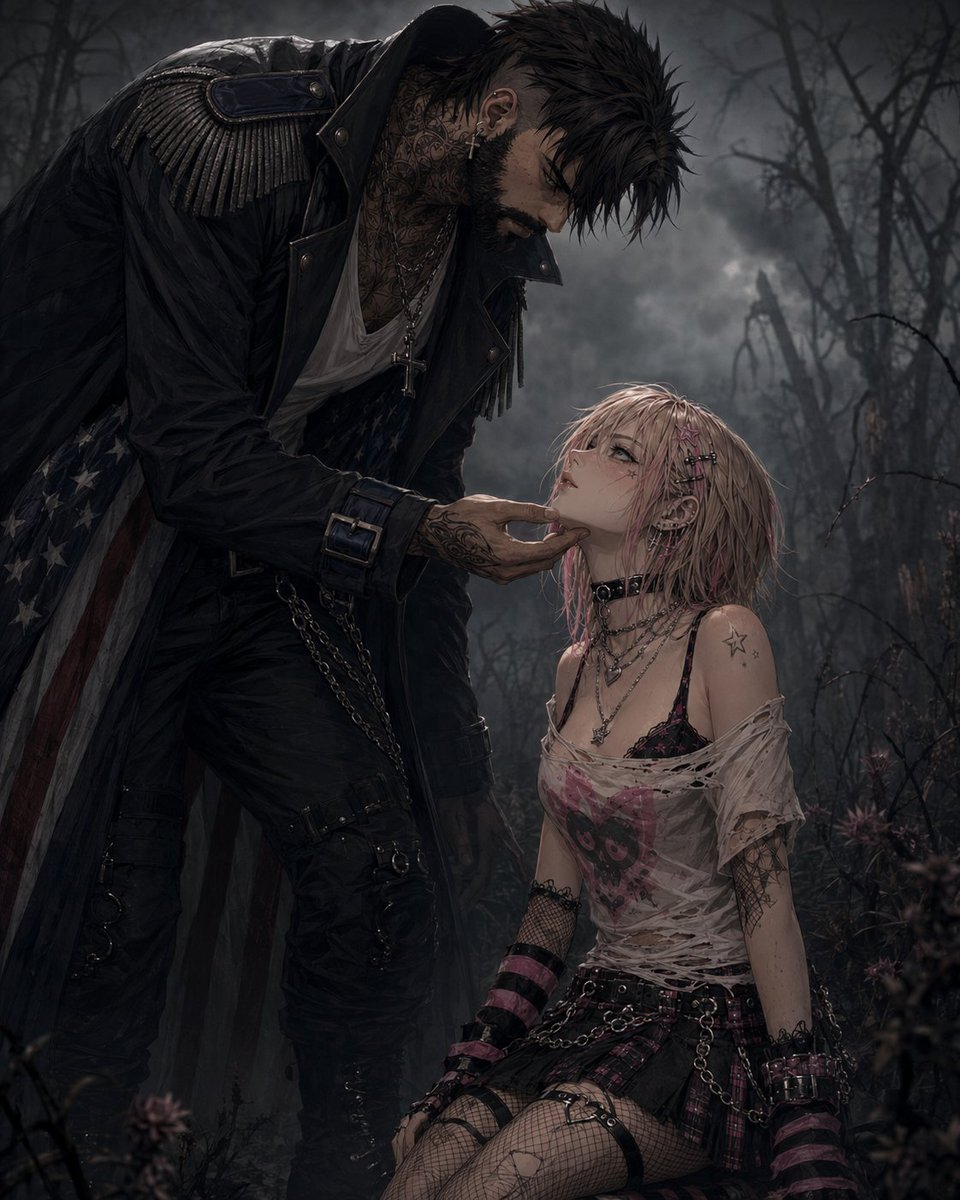
Stage a quiet, intimate encounter beneath a cold supernatural sky. A looming silhouette, an upward gaze, and a deliberate touch beneath the chin create the scene while both characters remain faithful to their sheets.
GET THE PROMPT ↓THE FINISHED LOOK
01 EXAMPLELow-angle staging and fog-filtered light bring the two characters into a single cinematic moment. Select the image to view the original at full size.
BEFORE YOU CREATE
BRING BOTH CHARACTER SHEETS.
- Attach Character Sheet A and Character Sheet B. Label the references clearly. Character A occupies the upper left; Character B looks upward from the lower right.
- Copy the complete prompt. Paste it alongside the two sheets. No additional pose, environment, or style reference is required.
- Create the encounter. Preserve both adult characters’ identities, wardrobes, and canonical proportions while the pose and perspective build the dramatic contrast.
THE COMPLETE PROMPT
ORIGINAL TEMPLATEYour supplied wording is preserved in full. Copy it with both character sheets to begin.
Read the complete prompt
Use the supplied CHARACTER SHEET A and CHARACTER SHEET B as the absolute and only authorities for the identities, appearances, anatomy, proportions, wardrobe language, accessories, and recognizable features of Character A and Character B.

Recreate those exact two characters in the cinematic dark-fantasy composition described below.

The user should need only:

1. This prompt
2. Character Sheet A
3. Character Sheet B

Do not require an additional pose reference, environment reference, style reference, or written character description. Infer every character-specific visual detail directly from the supplied character sheets.

CHARACTER FIDELITY — HIGHEST PRIORITY

The finished artwork must unmistakably depict the exact characters from the supplied sheets, not generic substitutes.

For both Character A and Character B, preserve every identity-defining trait visible on their respective sheets, including:

* clearly adult age
* species
* gender presentation
* facial structure
* eye shape and eye color
* skin tone
* hairstyle, length, texture, bangs, layers, and exact color
* body type, build, height impression, and proportions
* facial hair, if present
* scars, freckles, tattoos, markings, or body art
* horns, ears, tails, wings, claws, fangs, unusual anatomy, or supernatural features
* prosthetics, cybernetics, masks, visors, or distinctive physical traits
* signature jewelry
* accessories
* distinctive wardrobe elements
* clothing silhouette
* symbols, motifs, materials, and characteristic color palette

Do not beautify, simplify, genericize, feminize, masculinize, age-shift, or redesign either character.

If a feature is obscured or hidden on the character sheet, do not invent a conflicting replacement.

If either character has a recurring companion, familiar, creature, object, or accessory explicitly established by their character sheet, preserve it exactly and place it naturally in the scene.

RELATIVE SCALE

Preserve the characters’ canonical height difference and body proportions from the sheets.

The composition should create a strong visual contrast between them, with Character A positioned significantly higher in the frame and Character B lower, while still respecting their actual relative sizes.

Do not arbitrarily turn one character into a giant unless their character sheet establishes that scale.

Use posing, elevation, camera angle, and perspective to produce the dramatic height contrast.

COMPOSITION

Create a vertical cinematic dark-fantasy portrait with Character A occupying the upper-left portion of the frame and Character B occupying the lower-right.

Character A stands extremely close to Character B, towering visually over them because of the low camera angle and staging.

Character A bends forward at the waist and shoulders, leaning down toward Character B.

Their upper body forms a dark diagonal silhouette descending from the upper-left corner toward the center of the composition.

Character B is positioned lower, either kneeling, seated, crouched, or standing on a lower plane depending on what best preserves their canonical anatomy and proportions.

Character B tilts their head upward and looks directly toward Character A.

The two characters are only a short distance apart.

The pose should feel intimate, tense, mysterious, and almost ceremonial rather than openly violent.

HAND INTERACTION

Character A reaches one hand downward toward Character B.

The hand should enter the space beneath Character B’s face, lightly touching, supporting, or hovering beneath their chin.

The gesture should feel deliberate and controlled.

Character B remains still, looking upward toward Character A.

Their interaction should communicate:

* dark fascination
* supernatural tension
* forbidden intimacy
* curiosity
* dominance versus vulnerability
* an eerie sense of trust or danger

Avoid exaggerated aggression.

Do not depict strangulation, choking, or overt physical assault.

BODY LANGUAGE

Character A:

* looming forward posture
* head lowered toward Character B
* shoulders angled down
* upper torso partially obscuring the sky behind them
* one arm extended downward
* restrained, composed movement
* visually imposing presence

Character B:

* upright or slightly arched upper body
* chin raised
* face turned upward
* eyes directed toward Character A
* calm or entranced posture
* hands relaxed near their body unless their character design suggests otherwise
* flowing clothing, hair, fabric, accessories, or other sheet-appropriate elements trailing downward

The silhouettes of both characters must remain readable.

CAMERA

Use a dramatic low-angle close-to-medium shot.

Camera placement should feel approximately at Character B’s torso or waist height, looking slightly upward toward both characters.

Character A’s body should extend upward and partially disappear toward the top-left edge of the frame.

Character B should remain fully readable from approximately the waist or hips upward.

Use mild perspective exaggeration so Character A feels imposing without physically altering their canonical anatomy.

Lens impression:

* approximately 35–50mm cinematic equivalent
* intimate perspective
* moderate depth compression
* subtle low-angle distortion
* no extreme fisheye

FRAMING

Vertical aspect ratio approximately 2:3 or 4:5.

Character A dominates the upper-left half.

Character B anchors the lower-right half.

Their faces should sit relatively close together around the central third of the composition.

Allow Character A to be partially cropped by the top and left edges to make their presence feel larger and more mysterious.

Keep Character B’s face clearly visible.

The composition should form a strong diagonal line:

Character A’s head → Character A’s hand → Character B’s face → Character B’s body

ENVIRONMENT

Place them outdoors in an indistinct supernatural wilderness.

The environment should feel like a forgotten borderland between a dead forest, ancient moor, haunted garden, and mist-covered ruin.

Keep the background minimalist and atmospheric rather than detailed.

Suggested environmental elements:

* distant black grass
* vague silhouettes of dead plants
* thorny undergrowth
* low fog
* drifting mist
* faint particles floating through the air
* barely visible distant tree forms
* no modern objects
* no buildings dominating the composition

The environment exists primarily to support the silhouettes.

ATMOSPHERE

The scene should feel:

* ancient
* mournful
* dreamlike
* gothic
* supernatural
* cold
* romantic in a dark-fantasy sense
* unsettling but beautiful
* quiet rather than action-oriented

It should resemble a single frozen moment from a dark myth or forgotten fairy tale.

LIGHTING

Use extremely soft, diffused, overcast illumination.

The sky behind the characters provides most of the light.

Character A should be heavily shadowed and nearly silhouetted, while still retaining enough subtle detail to remain recognizable as the exact character from their sheet.

Character B should receive slightly more ambient illumination so their face, hair, clothing, and defining features remain readable.

Use:

* fog-filtered backlight
* faint rim lighting
* extremely soft shadow transitions
* low-key exposure
* gentle atmospheric bloom
* subtle edge light around hair and clothing
* no strong direct sunlight
* no obvious artificial light source

TONAL PALETTE

Use a restrained monochromatic or near-monochromatic palette dominated by:

* deep charcoal
* black
* muted blue-gray
* desaturated teal-gray
* pale fog tones
* subdued silver
* cold off-white where appropriate to the supplied character design

Preserve important canonical character colors where necessary for recognition, but heavily integrate them into the cold cinematic grading.

Avoid bright rainbow colors unless absolutely essential to a character’s identity.

COSTUME AND MATERIAL RESPONSE

Do not redesign either character’s wardrobe.

Instead, reinterpret the exact clothing from their sheets through the lighting and atmosphere of this scene.

Materials should react naturally:

* dark fabrics absorb most light
* leather receives faint highlights
* metal catches tiny cold reflections
* translucent fabric glows softly against the fog
* jewelry catches sparse points of light
* long cloth, coats, skirts, robes, hair, ribbons, chains, or similar elements hang naturally with gravity

If Character A or Character B has elaborate headwear, horns, crowns, antlers, hair ornaments, supernatural appendages, or other silhouette-defining structures, preserve them exactly and use them to strengthen the composition.

CINEMATIC DETAIL

Add subtle atmospheric particles.

Include delicate moisture or mist clinging to clothing and hair.

Allow occasional tiny highlights on reflective accessories.

Use extremely restrained film grain and soft cinematic diffusion.

The background should gradually disappear into fog.

Maintain a broad dynamic range while keeping most of the scene in shadow.

VISUAL STYLE

Create the scene as high-end cinematic dark-fantasy concept art / semi-realistic fantasy illustration.

Aim for:

* realistic anatomy
* believable materials
* painterly but controlled rendering
* crisp facial details where visible
* atmospheric depth
* sophisticated cinematic lighting
* subtle texture
* dramatic silhouettes
* gothic editorial photography influence
* premium fantasy-film key-art quality

Do not turn it into a generic anime screenshot unless the character sheets themselves require an anime-based visual language.

If the sheets use stylized/anime designs, translate them into a polished semi-realistic cinematic interpretation without changing their identities.

EXPRESSION

Character A’s expression should be subtle and character-appropriate.

Possible emotional impression:

* unreadable
* quietly fascinated
* controlled
* ominous
* possessive
* sorrowful
* curious

Character B looks upward with an expression appropriate to their established personality.

Possible emotional impression:

* mesmerized
* defiant
* trusting
* cautious
* curious
* serene
* apprehensive

Do not force either expression if it conflicts with their established characterization.

CRITICAL CHARACTER-LOCK RULES

The character sheets outrank every stylistic instruction in this prompt.

If any visual direction conflicts with the character sheets, preserve the character sheets.

Do not:

* replace either character with a generic fantasy man or woman
* alter facial structures
* change hairstyles
* change body types
* change skin tones
* remove distinctive markings
* change eye colors
* add random horns, wings, crowns, antlers, tails, armor, or weapons
* remove canonical horns, wings, tails, accessories, or unusual anatomy
* swap outfits for generic medieval clothing
* invent new tattoos
* erase scars
* alter canonical height differences
* make Character B childlike
* make either character appear underage
* merge the two character designs
* duplicate either character
* add additional people

There must be exactly two primary characters: Character A and Character B, except for any canonical companion/familiar explicitly established by one of the supplied sheets.

PRIORITY ORDER

When generating the image, follow this priority hierarchy:

1. Exact Character A identity
2. Exact Character B identity
3. Canonical anatomy, proportions, accessories, companions, and silhouettes
4. Face and hairstyle fidelity
5. The close looming/chin-touch interaction
6. Low-angle vertical composition
7. Dark gothic atmosphere
8. Foggy backlighting
9. Cold desaturated cinematic grading
10. Environmental detail

If necessary, sacrifice environmental complexity or decorative effects before sacrificing character fidelity.

The final result should feel like Character A and Character B have been taken directly from their respective character sheets and placed into an eerie, intimate dark-fantasy encounter — one looming downward from the shadows while the other gazes upward through a veil of cold supernatural fog.