IMAGE CREATION / CINEMATIC ACTION
DISSOLVING
INK.
The instant motion becomes art.
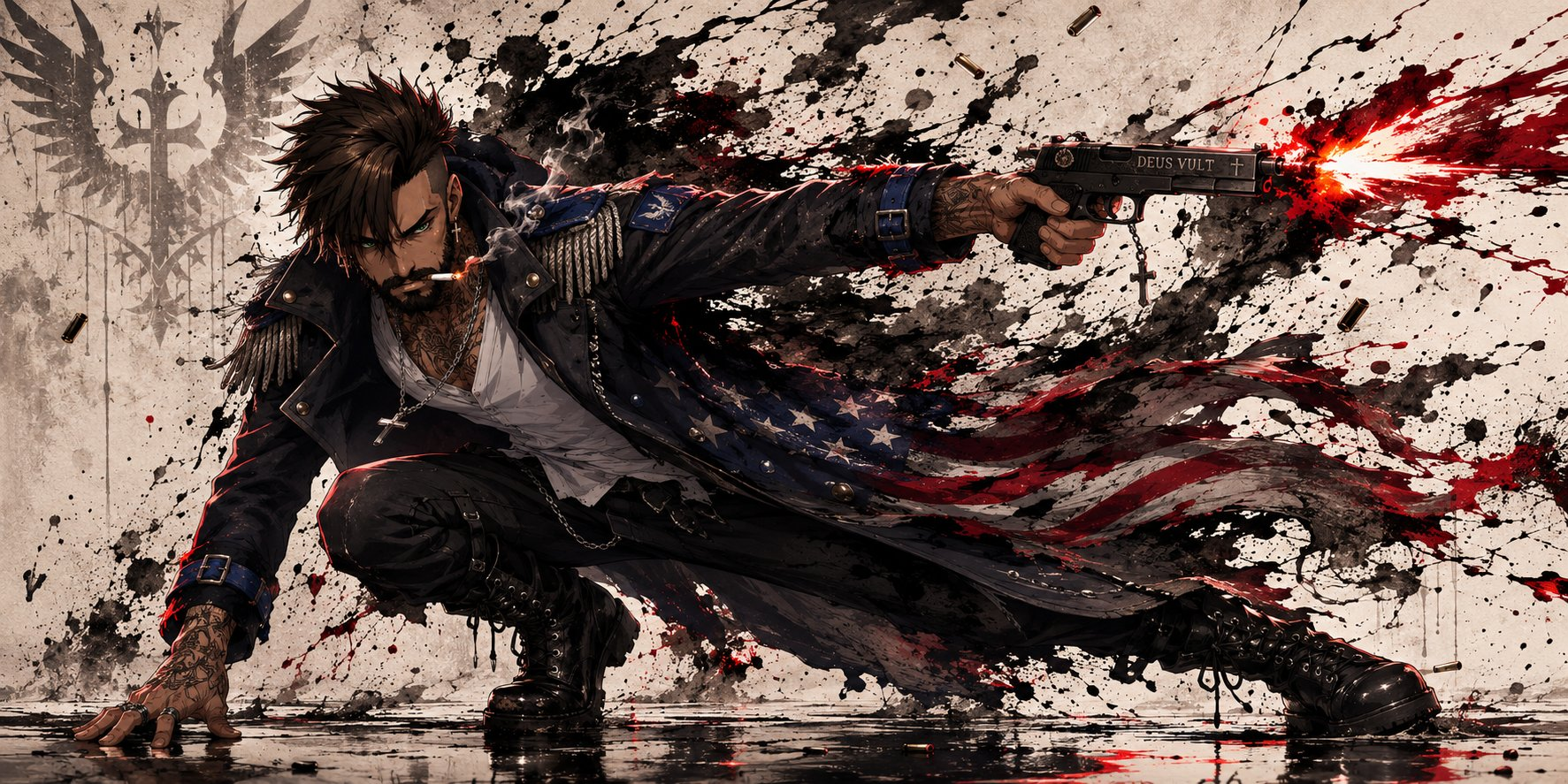
Freeze your character in an explosive low attack stance as their trailing silhouette breaks into ink, smoke, and glowing pigment. Their canonical weapon or power drives the action, and their own palette shapes the effects.
GET THE PROMPT ↓THE FINISHED LOOK
01 EXAMPLEA sharp, readable character at the center of directional ink and pigment. Select the image to view the original at full size.
BEFORE YOU CREATE
KEEP THE CHARACTER. UNLEASH THE MOTION.
- Attach a character sheet. Supply the reference that defines the character’s appearance, equipment, and visual identity.
- Copy the full prompt. Paste it into your image generation chat with the sheet. The attack adapts to the character’s canonical weapon, power, or fighting style.
- Create the cinematic frame. The prompt calls for a horizontal composition, a clear attack toward the right, and a readable character dissolving into directional ink effects.
THE COMPLETE PROMPT
ORIGINAL TEMPLATECopy the complete prompt and supply your character sheet. The wording below is preserved, with paragraph breaks for readability.
Read the complete prompt
✨New Prompt✨

Use the supplied character sheet as the absolute authority for the character’s identity and design. Recreate that exact character in the composition and visual language described below while preserving unmistakable recognizability.

CHARACTER FIDELITY — HIGHEST PRIORITY

Preserve every visible identity-defining trait from the supplied character sheet, including:

species
clearly adult age
gender presentation
facial structure
eye shape and eye color
hairstyle, hair length, texture, and color
skin tone
body type and proportions
scars, freckles, markings, tattoos, or birthmarks
horns, ears, tails, wings, claws, or other nonhuman anatomy
prosthetics, cybernetics, masks, visors, or unusual anatomy
signature jewelry and accessories
distinctive clothing, armor, fabrics, symbols, and motifs
signature weapons or equipment, if present
characteristic color palette
overall personality, elegance, aggression, menace, discipline, softness, or visual presence

Do not replace the character with a generic samurai, ninja, anime swordsman, or fantasy warrior. The face, silhouette, proportions, anatomy, clothing language, and defining features must remain faithful to the supplied reference.

CORE COMPOSITION

Create a wide cinematic horizontal illustration of the character caught in an explosive low combat stance.

Show the character approximately in side profile or strong three-quarter profile, positioned primarily on the left half of the composition, with the body leaning aggressively forward.

The pose should feel like a frozen instant during a devastating attack:

front leg deeply bent
rear leg extended behind
torso lowered close to the ground
shoulders angled forward
center of gravity low
one arm reaching or balancing behind if appropriate
weapon arm extended dramatically across the image
clothing, hair, ribbons, coat tails, energy, smoke, or other loose elements trailing from the motion

The overall silhouette should communicate speed, precision, controlled violence, and supernatural momentum.

Do not rigidly copy a specific human sword pose if the supplied character's anatomy or weapon type makes another attack motion more natural. Adapt the pose intelligently while preserving the same dramatic visual energy.

WEAPON / ATTACK ADAPTATION

Use the character's canonical weapon, power, ability, or fighting style from the character sheet whenever one is visible.

If the character carries a sword, blade, firearm, staff, spear, magical weapon, cybernetic weapon, claws, or another signature tool, use that rather than automatically giving them a katana.

If the character does not have a visible weapon, interpret the extended attack using something appropriate to their design, such as:

supernatural energy
elemental magic
claws
psychic force
fire
lightning
shadow
blood magic
spectral constructs
technological energy
divine power
demonic power

The attack should extend strongly toward the right side of the image, creating a long visual line that leads the eye across the composition.

DISSOLVING INK EFFECT

The defining visual effect is that the character appears to be partially disintegrating into explosive ink, pigment, smoke, particles, brush splashes, and granular fragments.

The effect should erupt especially from:

the back
shoulders
hair
trailing clothing
limbs
weapon trail
outer silhouette
the space behind the character

Portions of the character should transition naturally from solid anatomy and clothing into increasingly abstract particulate matter.

Use a mixture of:

dense black ink
charcoal dust
watercolor blooms
paint droplets
splattered pigment
dry-brush streaks
smoky particulate clouds
tiny scattered flecks
large irregular splash shapes
dissolving silhouette fragments

The disintegration should feel directional, as though the character's extreme speed is tearing their body into painted particles.

Do not make the character completely abstract. The face, torso, primary anatomy, and major identifying features must remain readable.

CHARACTER-SPECIFIC COLOR EFFECT

Do not automatically use blue.

Extract the dominant accent colors from the supplied character sheet and use those colors for the supernatural highlights, weapon glow, particle illumination, and selected splashes.

For example:

red character → crimson / scarlet energy
green character → emerald / toxic green energy
violet character → violet / ultraviolet energy
gold character → amber / molten gold energy
cyan character → electric cyan energy
monochrome character → restrained white, silver, or grayscale energy

The glowing accent color should appear selectively rather than covering the entire character.

Use it most strongly around:

eyes
weapon edge
attack trail
magical effects
scattered particles
reflected light on nearby surfaces

FACE AND EYES

Keep the character's recognizable facial structure even though the pose is dynamic and partially shadowed.

At least one eye should remain readable when anatomically possible.

The eyes may carry a subtle supernatural glow using the character's signature accent color, but preserve the canonical eye shape and base coloration.

Do not turn the face into a featureless black silhouette.

LIGHTING

Use dramatic low-key lighting.

The character should be predominantly dark against a pale background, with selective illumination from the attack or supernatural energy.

Use strong rim light and reflected colored light to reveal:

face
hands
weapon
armor edges
clothing folds
hair
significant anatomy
character-specific accessories

The luminous weapon or attack should create a vivid visual contrast against the otherwise restrained palette.

BACKGROUND

Use a minimal off-white, parchment, concrete, watercolor-paper, or textured ivory background.

The environment should remain intentionally sparse so the character and particle explosion dominate the image.

Add subtle surface texture such as:

paper grain
faded plaster
soft gray stains
watercolor discoloration
faint scratches
aged pigment

Avoid detailed scenery, buildings, landscapes, crowds, or distracting objects.

The background should feel like a physical artistic surface being stained by the character's movement.

GROUND CONTACT

Include a thin reflective or wet-looking ground plane along the bottom edge.

Show subtle:

reflections
smeared black pigment
ink pooling
scattered particles
motion streaks
splash marks beneath the feet

The character must feel physically grounded even while dissolving into abstraction.

ART DIRECTION

Blend:

expressive ink illustration
sumi-e inspired brushwork
watercolor dispersion
splatter painting
dark fantasy concept art
cinematic anime action composition
graphic-novel silhouette work
modern digital particle effects

Favor irregular organic marks rather than clean computer-generated particle spheres.

The image should look as though a highly rendered character illustration is violently breaking apart into traditional ink and watercolor.

DETAIL BALANCE

Maintain three visual zones:

1. Solid focal zone: Face, torso, hands, weapon grip, and core anatomy rendered with the highest clarity.

2. Transitional zone: Edges of clothing, limbs, hair, and weapon trail breaking into brush fragments and particles.

3. Abstract zone: Large clouds of splattered ink, pigment, smoke, and glowing particles expanding into the negative space.

This progression should feel smooth and intentional.

MOOD

The final image should feel:

lethal
elegant
fast
supernatural
controlled
dramatic
mysterious
painterly
cinematic

It should depict the character at the exact instant when an impossibly fast attack causes their physical silhouette to dissolve into art itself.

IMPORTANT CONSTRAINTS

Use only the character supplied in the character sheet.
Do not redesign the character.
Do not default to a samurai costume.
Do not automatically add a katana.
Do not change the character's species.
Do not alter canonical scars, markings, cybernetics, horns, masks, or accessories.
Do not make the body unrecognizable under the ink effects.
Do not clutter the background.
Do not make the splatter uniformly distributed.
Do not use rainbow particles unless part of the character's established design.
Keep the attack direction visually clear.
Preserve readable anatomy and weapon handling.
Keep the composition strongly horizontal and cinematic.
Prioritize character fidelity first, dramatic motion second, dissolving-ink aesthetics third.

OPTIONAL INTENSITY NOTE

Push the particulate destruction especially hard behind the character and along the attack trail, while keeping the forward-facing portions of the body comparatively sharp.

The result should look like the character is moving so violently through space that their trailing silhouette is being ripped apart into ink, smoke, and glowing pigment.