IMAGE CREATION / CINEMATIC CITY SCENE
RAINY CITY.
PASSING BUS POV.
A fleeting glimpse. An untold story.
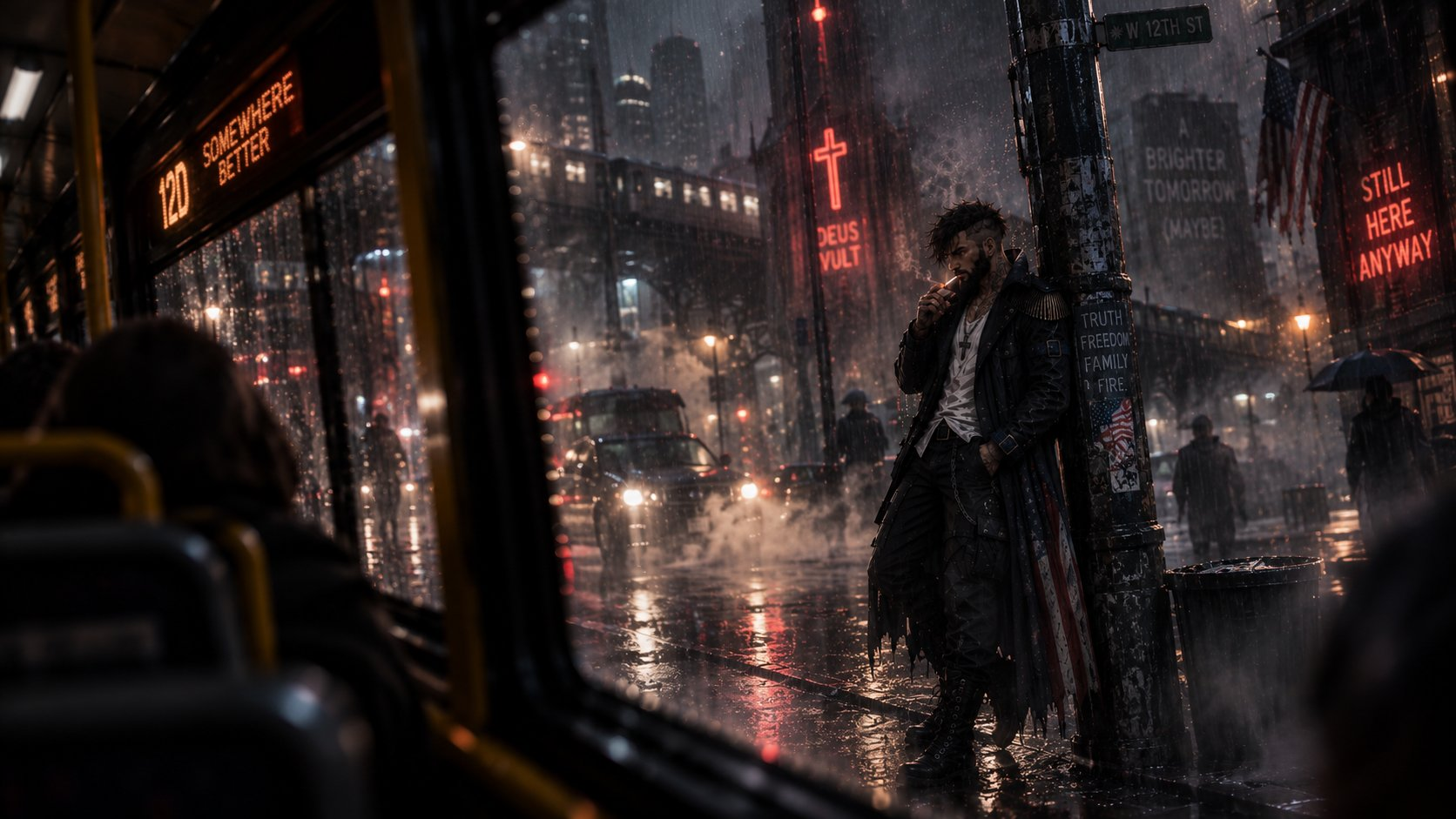
Catch your character through the rain-covered window of a moving city bus. Layered rain, blurred passengers, street-level steam, and warm reflections turn a quiet sidewalk moment into cinematic neo-noir key art.
GET THE PROMPT ↓THE FINISHED LOOK
01 EXAMPLEAn unobserved moment on a rainy sidewalk, framed by the bus interior. Select the uncropped image to view the original at full size.
BEFORE YOU CREATE
START WITH YOUR CHARACTER SHEET.
- Attach one reference sheet. The character’s identity, wardrobe, accessories, and visual language remain the authority.
- Copy the complete prompt. Paste it alongside your sheet to create one cinematic 16:9 environmental illustration.
- Keep the view inside the bus. Blurred seats, rails, reflections, and rain on the window frame the character outside, unaware of the camera.
THE COMPLETE PROMPT
ORIGINAL TEMPLATEYour supplied wording is preserved in full. Copy it with your character sheet to begin.
Read the complete prompt
MASTER PROMPT — CINEMATIC RAINY CITY / PASSING BUS POV

Create one cinematic 16:9 realistic video-game-style environmental artwork using the supplied character sheet.

SCENE CONCEPT:
The character is alone on a rain-soaked city sidewalk at night, casually leaning against a weathered street pole while a city bus passes them.

The camera is INSIDE the moving bus, looking outward through a large rain-covered side window.

The image must feel like an accidental cinematic moment captured by a passenger rather than a staged character portrait.

CHARACTER SHEET — ABSOLUTE AUTHORITY

Use the supplied character sheet as the absolute authority for the character's identity.

Preserve exactly:
- apparent age
- facial structure
- hairstyle and hair color
- facial hair
- eye color
- skin tone
- body proportions
- tattoos
- scars
- piercings
- supernatural traits
- distinctive markings
- clothing
- footwear
- jewelry
- accessories
- recognizable symbols

Do not redesign or reinterpret the character.

Do not copy the character-sheet composition, poses, labels, background, layout, or presentation.

Only transfer the established character accurately into this completely new scene.

POSE

The character is leaning naturally against a street pole or old lamppost.

Their posture should feel relaxed, tired, detached, contemplative, or quietly intimidating depending on the personality conveyed by the character sheet.

One shoulder rests against the pole.

Their weight is unevenly distributed between their legs.

Avoid heroic posing.

Avoid symmetrical posture.

Avoid direct eye contact with the camera.

The character should appear completely unaware that anyone on the passing bus is looking at them.

If appropriate to the character, they may:
- smoke
- hold a drink
- check their phone
- keep their hands in their pockets
- loosely hold an established prop from their character sheet

Never invent a major prop that contradicts their characterization.

CAMERA — CRITICAL

The viewpoint must unmistakably come from INSIDE A MOVING CITY BUS.

Use a slightly tilted Dutch-angle composition, approximately 4–10 degrees.

The character is outside the bus and framed through the side window.

Foreground elements inside the bus should partially obstruct the view:
- blurred seat backs
- metal or yellow handrails
- dark window framing
- silhouettes of one or two passengers
- faint interior reflections on the glass

The character should occupy roughly the middle-right third of the composition rather than the center.

The scene should feel like the viewer noticed this person for only several seconds while passing them.

Use a cinematic medium-long telephoto perspective with subtle compression.

Do not make this look like a clean character portrait.

RAIN — HEAVY AND PHOTOGRAPHIC

It is raining heavily.

Show multiple distinct rain effects:
- sharply illuminated rain streaks outside
- large droplets crawling down the bus window
- tiny beads of water across the glass
- distorted light through water droplets
- rain bouncing from pavement
- small splashes around shoes and curb
- water dripping from clothing
- wet hair where appropriate
- soaked fabric edges
- umbrellas moving through the background
- passing headlights diffused by rain
- puddles reflecting signs and traffic

Some rain should be sharp while other rainfall becomes streaked from motion and shallow depth of field.

Do not cover the character's face with excessive window droplets.

CITY ATMOSPHERE

Create a dense lived-in downtown environment at night.

Include:
- aging brick and concrete buildings
- narrow storefronts
- distant apartment windows
- traffic lights
- cars moving through rain
- pedestrians with umbrellas
- trash cans
- old signage
- street markings
- weathered posters
- pipes, vents, fire escapes, or elevated infrastructure where compositionally useful

The city should feel imperfect and inhabited rather than futuristic-clean.

SUBTLE CITY SMOG

Add a restrained layer of urban smog and atmospheric pollution.

The smog should appear as:
- faint gray-brown atmospheric haze
- distant buildings gradually disappearing into polluted mist
- headlights creating soft volumetric cones
- warm street lamps glowing through suspended moisture
- steam mixing naturally with rain and city haze

Keep the smog subtle.

It should increase depth and atmosphere without turning the scene into thick fog.

GROUND ATMOSPHERE

Add localized steam escaping from:
- subway grates
- vents
- storm drains
- utility openings

Steam should remain primarily near street level and mix naturally with the rain.

LIGHTING

Use cinematic motivated lighting only.

Primary sources:
- warm sodium or tungsten streetlights
- vehicle headlights
- brake lights
- storefront illumination
- occasional neon signage
- bus interior spill light

Use strong but believable contrast.

Allow parts of the character's coat or silhouette to disappear into shadow.

Use selective edge lighting from signs, streetlights, or headlights to separate the character from the environment.

Wet pavement should create long broken reflections.

COLOR PALETTE

Predominantly:
- charcoal black
- gunmetal gray
- desaturated blue
- dirty concrete gray
- muted brown
- cold rainy cyan

Accent sparingly with:
- amber
- warm white
- dim red
- occasional character-specific colors derived from the supplied sheet

Do not flood the entire scene with saturated neon.

CHARACTER-SPECIFIC ENVIRONMENTAL STORYTELLING

Study the supplied character sheet and subtly customize the surrounding environment to that character.

Infer appropriate environmental motifs from their established:
- personality
- profession
- affiliations
- visual symbolism
- supernatural nature
- cultural influences
- colors
- themes

Examples could include appropriately designed:
- posters
- stickers
- graffiti
- storefront signs
- religious symbols
- corporate advertisements
- gang markings
- political propaganda
- occult symbols
- faction emblems
- transit advertising

These must feel like believable elements of the world rather than floating graphic overlays.

Do not automatically reuse imagery or slogans from previous characters.

Every character should receive their own environmental storytelling.

SIGNAGE

Any readable signs should be short, natural pieces of world-building.

Generate new signage appropriate to the supplied character and setting.

Avoid long paragraphs of text.

Do not reproduce words or slogans appearing in unrelated reference images unless they are explicitly part of the supplied character's canon.

BUS MOTION

Communicate forward movement through:
- subtle directional motion blur
- smeared distant lights
- softened foreground passengers
- slightly stretched rain trails
- imperfect framing
- asymmetric composition

The character should remain comparatively sharp because the viewer's attention has momentarily locked onto them.

DEPTH OF FIELD

Use pronounced cinematic depth layering:

FOREGROUND:
bus seats, rails, passengers, window frame — heavily blurred

GLASS PLANE:
select rain droplets occasionally sharp

MIDGROUND:
character and street pole — primary focus

BACKGROUND:
traffic, pedestrians, storefronts, architecture — increasingly soft

DISTANCE:
buildings disappearing into rainfall and subtle smog

COMPOSITION

Favor negative space around the character.

Do not fill every part of the frame.

The character should look visually isolated despite being surrounded by a busy city.

Use architecture, window framing, poles, lights, and reflections to naturally frame them.

MOOD

The final image should feel like a frame from an expensive narrative-driven AAA video game or prestige neo-noir film.

Atmosphere:
lonely
urban
observational
melancholic
dangerous
grounded
cinematic
quietly dramatic

The viewer should feel as though they saw someone important through the window of a moving bus without knowing their story.

RENDERING STYLE

Realistic high-end video game key art.

Photorealistic materials with slightly stylized cinematic character rendering.

Physically believable:
- wet leather
- soaked cloth
- skin
- metal
- glass
- pavement
- smoke
- rain
- atmospheric haze

Natural facial anatomy.

Detailed but not excessively sharpened.

Subtle film grain.

Realistic highlight bloom.

Soft halation around strong lights.

Anamorphic-style cinematic light behavior used sparingly.

Very high dynamic range.

Movie-quality environmental lighting.

16:9 widescreen.

CRITICAL NEGATIVES

Do not:
- pose the character toward the camera
- center the character like a poster
- create a clean full-body character showcase
- recreate the character-sheet background
- add character-sheet labels
- make the bus interior disappear
- place the camera outside the bus
- remove the rain-covered window
- turn subtle smog into dense fog
- oversaturate neon
- create a pristine cyberpunk city
- excessively blur the character
- obscure the face completely
- invent identity-defining traits
- redesign established clothing
- add unrelated political, religious, faction, or cultural imagery
- make the moment look staged

FINAL PRIORITY ORDER:

1. Character identity fidelity
2. Clearly readable passing-bus viewpoint
3. Natural candid body language
4. Cinematic composition
5. Heavy layered rain
6. Subtle city smog and steam
7. Character-specific environmental storytelling
8. Realistic lighting and wet surfaces
9. Motion, depth, and photographic imperfection