IMAGE CREATION / CINEMATIC PORTRAIT
SURREAL MANGA
PORTRAIT.
One character. Two scales. An inner world in ink.
Create a haunting vertical manga composition: a monumental facial portrait, the same character standing below, and expanding water ripples woven together in distressed monochrome ink.
GET THE PROMPT ↓THE FINISHED LOOK
02 EXAMPLESOne surreal composition, two distinct identities. Select an image to view the original at full size.
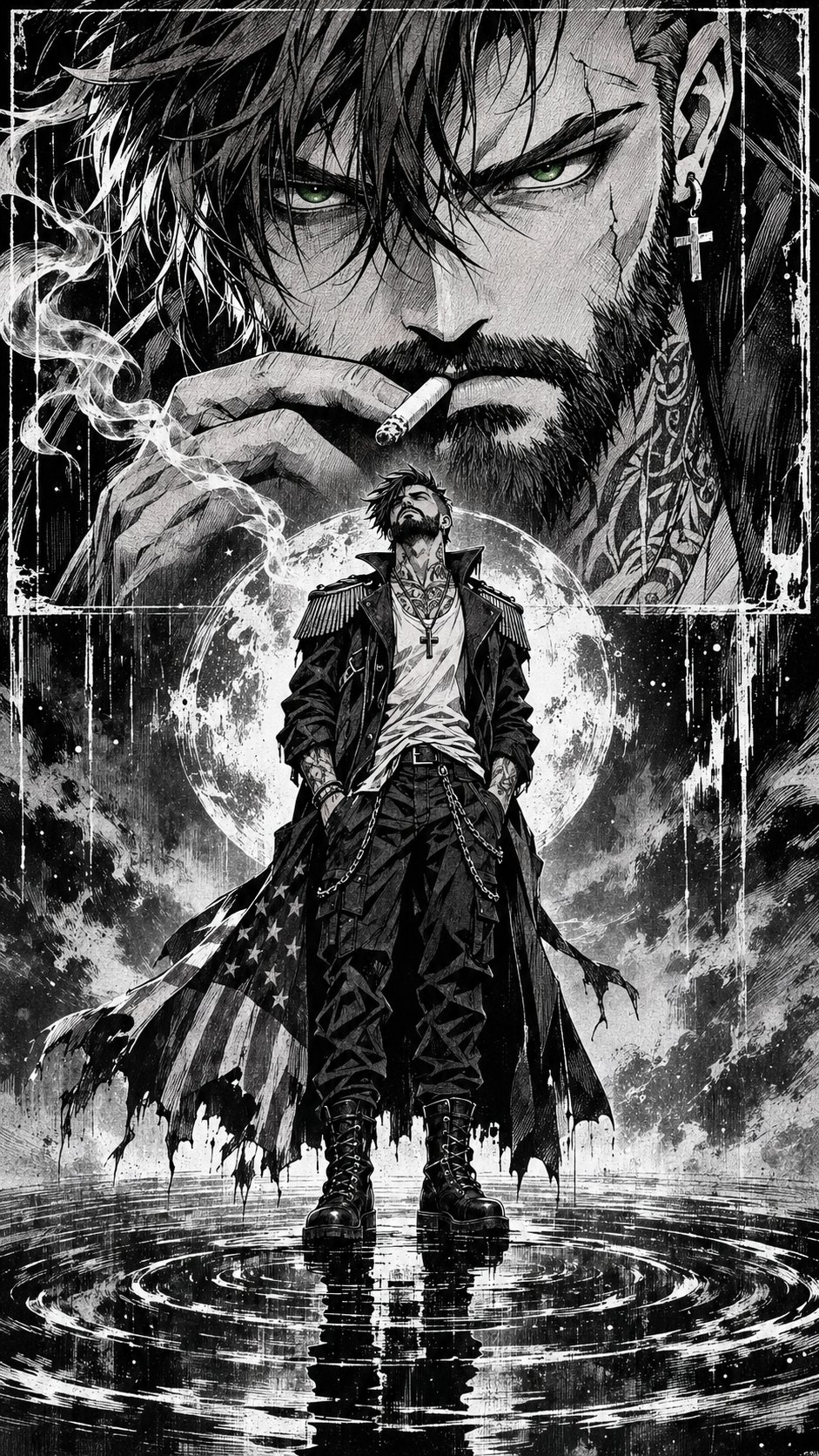
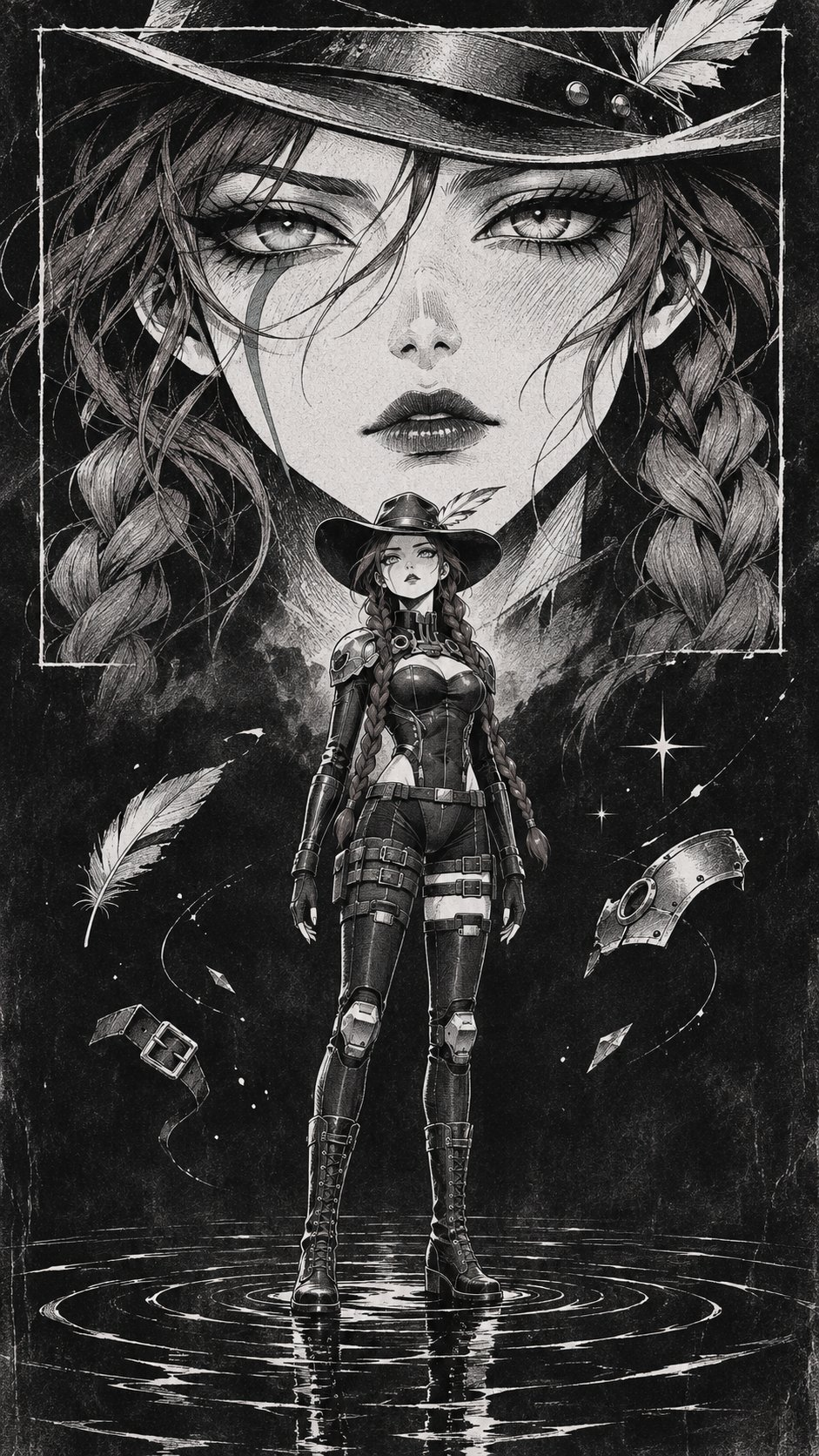
BEFORE YOU CREATE
KEEP YOUR CHARACTER RECOGNIZABLE.
- Supply a character sheet. Use the sheet as the authority for identity, clothing, anatomy, and signature features.
- Add your composition reference. The prompt refers to reference artwork for its visual language. Attach your chosen reference or one of the examples above alongside the character sheet.
- Copy and create. Use the full prompt to request a vertical 9:16 monochrome illustration with two depictions of the same character, a full body figure, and elliptical water ripples.
THE COMPLETE PROMPT
ORIGINAL TEMPLATECopy the complete prompt and use it with your character sheet and composition reference. All supplied instructions are preserved below.
Read the complete prompt
# UNIVERSAL SURREAL MANGA PORTRAIT
## ABSOLUTE CHARACTER LOCK • VERTICAL 9:16 • DUAL SCALE COMPOSITION • MONOCHROME INK

### OBJECTIVE

Create ONE finished **vertical 9:16 illustration (1080 × 1920 composition)** using the supplied CHARACTER SHEET as the absolute authority for character identity.

Reinterpret the supplied character in a haunting, experimental manga composition featuring an enormous facial closeup looming behind a smaller full body depiction of the same character, surrounded by surreal symbolism and expanding water ripples.

The entire composition must be deliberately designed for a tall vertical canvas, NOT cropped, stretched, or extended from a square composition.

The character sheet determines every character specific feature. The reference artwork determines the visual language and compositional concept.

---

## 1. ABSOLUTE CHARACTER IDENTITY LOCK

The uploaded character sheet is the ONLY authority for the character's identity.

Analyze and faithfully preserve:

- Facial structure, jawline, cheekbones, nose, mouth, and facial proportions.
- Eye shape, iris appearance, eyebrows, and characteristic expression.
- Hairstyle, length, texture, parting, silhouette, and distinctive strands.
- Facial hair, including beard, mustache, and stubble.
- Tattoos, scars, freckles, makeup, and distinctive markings.
- Body build, proportions, and posture.
- Exact clothing design, footwear, accessories, and jewelry.
- Recognizable character specific details and visual motifs.

Do not transfer identity features from the original artwork.

Do not change the character's apparent age, gender presentation, facial anatomy, body proportions, or defining features.

Both character depictions MUST represent the exact same individual.

---

## 2. VERTICAL COMPOSITION — THREE VISUAL ZONES

Design the artwork around a continuous vertical visual hierarchy.

**UPPER ZONE: 0–42% of canvas**

An enormous, emotionally intense facial portrait.

**MIDDLE ZONE: 30–78% of canvas**

A smaller, full body depiction of the character, overlapping the giant portrait and descending into darkness.

**LOWER ZONE: 73–100% of canvas**

A surreal reflective surface with expanding concentric water ripples.

These zones intentionally overlap to create visual continuity.

Maintain an uninterrupted central vertical axis connecting the giant portrait, the standing figure, and the center of the water ripples.

---

## 3. UPPER ZONE — MONUMENTAL FACIAL PORTRAIT

Create an enormous closeup of the character's face occupying approximately the upper 42% of the vertical canvas.

Frame the portrait inside a thin, imperfect rectangular manga panel positioned near the top.

The rectangle should be significantly taller than the original square reference's portrait panel.

The character's face fills the panel, with the eyes positioned around 20–27% of the overall canvas height.

The eyes should dominate the visual impression.

Preserve the exact character specific eye shape, eyebrow structure, hairstyle, facial anatomy, and markings.

Use:

- Intricate iris linework.
- Delicate eyelid detailing.
- Strong expressive eyebrows.
- Organic black shadow masses.
- Fine crosshatching.
- Scratchy white highlights.
- Irregular ink contours.
- Selective negative space.

Allow the character's hair and facial contours to partially break the rectangular frame.

The portrait may extend down toward the middle of the canvas, gradually dissolving into ink shadows.

The background face should express the character's internal emotional world.

Avoid generic anime eyes or facial features that contradict the supplied character sheet.

---

## 4. MIDDLE ZONE — CENTRAL FULL BODY CHARACTER

Position a smaller full body depiction of the same character on the central vertical axis.

The character's head should begin around 32–38% of the canvas height.

The feet should reach approximately 78–82% of the canvas height.

The central figure must overlap the lower portion of the giant facial portrait.

**The entire body must remain visible from head to footwear.**

Preserve the character's actual proportions rather than artificially stretching the body to fill the taller canvas.

Use a natural standing pose that reflects the character's personality.

Render the figure predominantly as a dense black ink silhouette with selective pale ink detailing.

Important character features must remain recognizable:

- Hairstyle silhouette.
- Facial hair where applicable.
- Clothing construction.
- Coat, jacket, dress, or outfit shape.
- Tattoos and markings where visible.
- Jewelry and accessories.
- Footwear.
- Body proportions.

Use subtle white contour lines to distinguish overlapping dark clothing and limbs.

The figure should feel isolated, introspective, and suspended in an infinite dark environment.

Do not enlarge the central figure so much that it obscures the giant portrait's eyes.

---

## 5. LOWER ZONE — EXPANDING WATER RIPPLES

The character stands upon a dark, nearly invisible reflective surface.

Directly beneath the feet, create a series of irregular concentric water ripples.

The ripple origin should align with the central vertical axis.

The ripples spread outward across the bottom 25–30% of the image.

Because this is a vertical composition, the rings must be drawn as flattened ellipses in perspective, NOT perfect circles viewed from above.

The nearest ripple arcs should extend toward the bottom corners of the canvas.

Some rings may disappear beyond the left and right edges.

Use:

- Thin white ink strokes.
- Broken elliptical contours.
- Uneven line thickness.
- Small reflected highlights.
- Sparse droplets and imperfections.
- Subtle dark reflections.

The water should feel impossibly still except for the disturbance surrounding the character.

Avoid realistic ocean waves, splashes, or elaborate environmental reflections.

---

## 6. CHARACTER ADAPTIVE FLOATING SYMBOLISM

Analyze the supplied character sheet and identify distinctive visual motifs, accessories, themes, or personality cues.

Select 3–5 small symbolic objects that suit the character.

Possible examples:

- Feathers or petals.
- Falling leaves.
- Broken glass fragments.
- Small pieces of fabric.
- Chains or jewelry fragments.
- Character associated objects.
- Abstract ink shapes inspired by the character's design.

Arrange them asymmetrically around the central figure.

Use the extra vertical space to create a natural sense of falling or suspension.

Place some objects near the lower edge of the portrait and others alongside the character's torso and legs.

Keep the symbolism delicate and restrained.

Do not introduce unrelated imagery or clutter.

If no suitable motifs are apparent, use abstract featherlike ink fragments.

---

## 7. ART STYLE — MONOCHROME EXPERIMENTAL MANGA

The entire artwork must resemble an authentic hand illustrated manga ink print.

Mandatory qualities:

- Strictly black and white.
- Near black charcoal background.
- Subtle distressed paper texture.
- Fine pale ink linework.
- Deep black shadow masses.
- Expressive facial hatching.
- Irregular line weights.
- Scratched white highlights.
- Organic unfinished contours.
- Sparse gray halftones.
- Strong negative space.
- Vintage print imperfections.
- Gothic psychological atmosphere.

The artwork should feel handmade, haunting, emotionally sophisticated, and slightly imperfect.

Avoid polished digital anime aesthetics.

Translate all original character sheet colors into monochromatic tonal values without sacrificing identity.

Dark clothing becomes dense black ink.

Light clothing becomes white negative space or pale gray hatching.

Hair colors are translated into relative tonal density.

Distinctive eyes, tattoos, and markings must remain recognizable.

---

## 8. VERTICAL VISUAL BALANCE

The composition must feel intentionally designed for a smartphone wallpaper or vertical poster.

Maintain these approximate proportions:

- Top 5%: dark negative space and beginning of portrait frame.
- 5–42%: giant facial portrait.
- 32–78%: overlapping full body character.
- 73–100%: expanding water ripples and surrounding darkness.

The giant eyes should serve as the first focal point.

The central figure should become the second focal point.

The water ripples should guide the viewer's eye downward and complete the composition.

Preserve breathing room along the sides.

Do not crop the character's head, hands, feet, or important clothing details.

The portrait frame may intentionally extend toward the side edges, but the facial features must remain clearly readable.

---

## 9. EMOTIONAL ADAPTATION

Interpret the character's personality from the supplied character sheet.

The giant portrait represents the character's inner emotional state.

The smaller full body figure represents their outward presentation.

These two emotional expressions may contrast subtly.

Examples:

- Stoic exterior, haunted eyes.
- Confident exterior, melancholic gaze.
- Gentle exterior, emotionally exhausted eyes.
- Defiant exterior, introspective expression.
- Mysterious exterior, unsettling intensity.

Do not impose an expression that contradicts the character's established identity.

Maintain the dark, surreal atmosphere regardless of character personality.

---

## 10. STRICT REQUIREMENTS

- ONE finished illustration.
- EXACT vertical 9:16 aspect ratio.
- TWO depictions of ONE character.
- Giant facial closeup in upper composition.
- Smaller full body character centered below.
- Both depictions must match the supplied character sheet.
- Full body visible, including feet.
- Concentric elliptical water ripples beneath feet.
- Three to five character adaptive floating elements.
- Near black textured background.
- White and pale gray manga ink detailing.
- Strong vertical hierarchy.
- Intentional negative space.
- No typography, signatures, logos, or watermarks unless explicitly requested.

---

## 11. NEGATIVE CONSTRAINTS

NO square composition.
NO stretched anatomy.
NO cropped full body figure.
NO oversized central figure obscuring the portrait.
NO incorrect facial features.
NO character redesign.
NO altered hairstyle.
NO missing facial hair.
NO incorrect clothing.
NO missing signature accessories.
NO generic anime face.
NO extra characters.
NO extra limbs or fingers.
NO full color.
NO photorealism.
NO glossy 3D rendering.
NO smooth vector artwork.
NO elaborate background scenery.
NO unrelated symbolism.
NO excessive decorative clutter.
NO artificial symmetry in floating objects.

---

## 12. FINAL QUALITY DIRECTIVE

Create a gallery worthy, vertically composed surreal manga illustration that feels uniquely designed around the supplied character.

The oversized facial portrait must feel monumental and psychologically intense.

The central full body character must remain instantly recognizable.

The water ripples and floating symbolic objects must create a cohesive dreamlike environment.

Preserve the original artwork's delicate ink craftsmanship, dramatic contrast, imperfect linework, and emotional atmosphere.

**CHARACTER SHEET = ABSOLUTE IDENTITY AUTHORITY.**

**REFERENCE ARTWORK = COMPOSITIONAL AND STYLISTIC AUTHORITY.**

**FINAL OUTPUT = ONE COMPLETE VERTICAL 9:16 MONOCHROME SURREAL MANGA ILLUSTRATION.**