IMAGE CREATION / DARK ANIME SANCTUARY
UNIVERSAL CHARACTER
ASCENDANCE.
A sanctuary shaped by the character’s existence.
Suspend your character at the center of an impossibly vast gothic sanctuary. Monumental architecture, deep shadows, and controlled supernatural light express their identity without changing their established design.
GET THE PROMPT ↓THE FINISHED LOOK
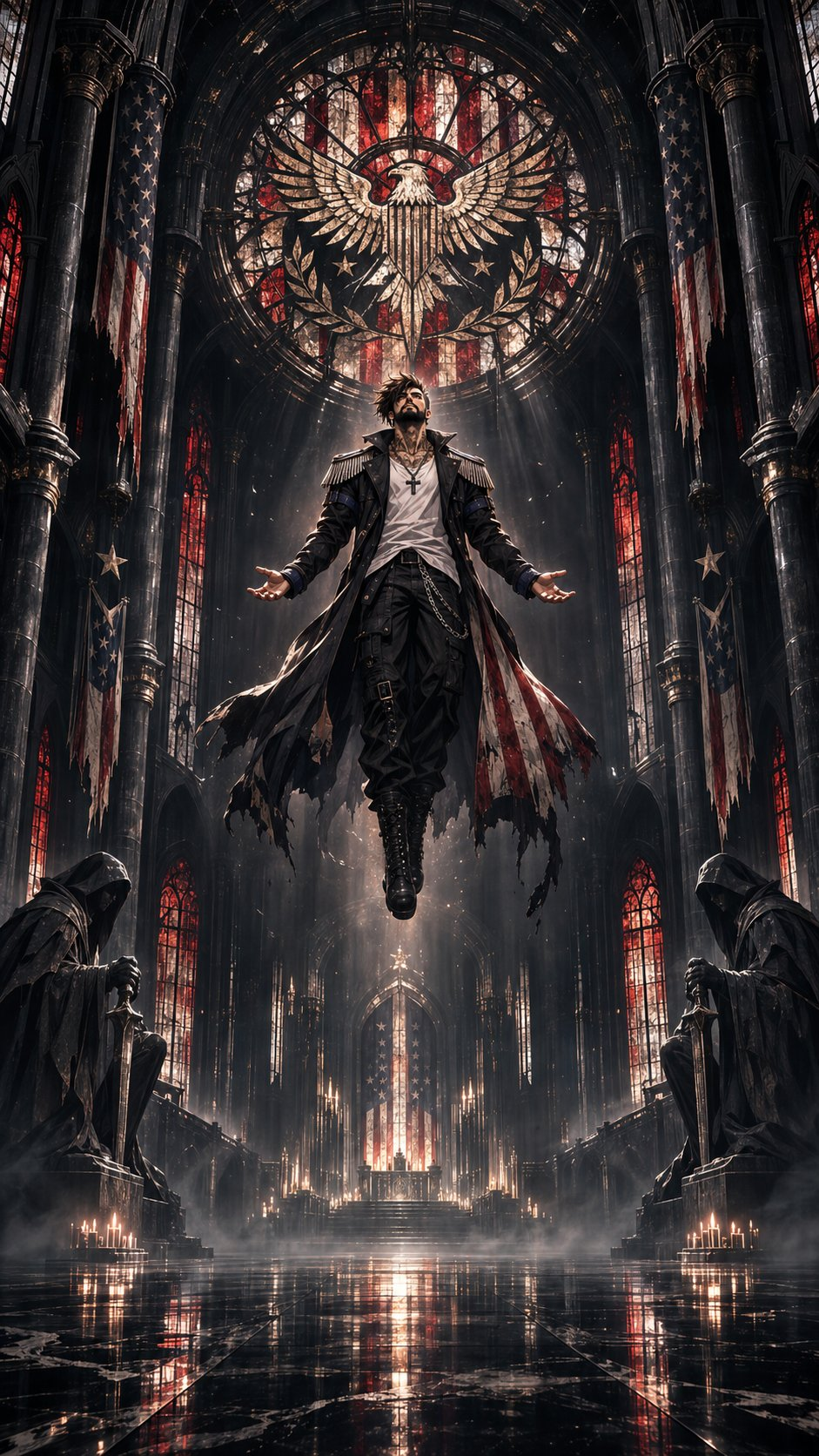
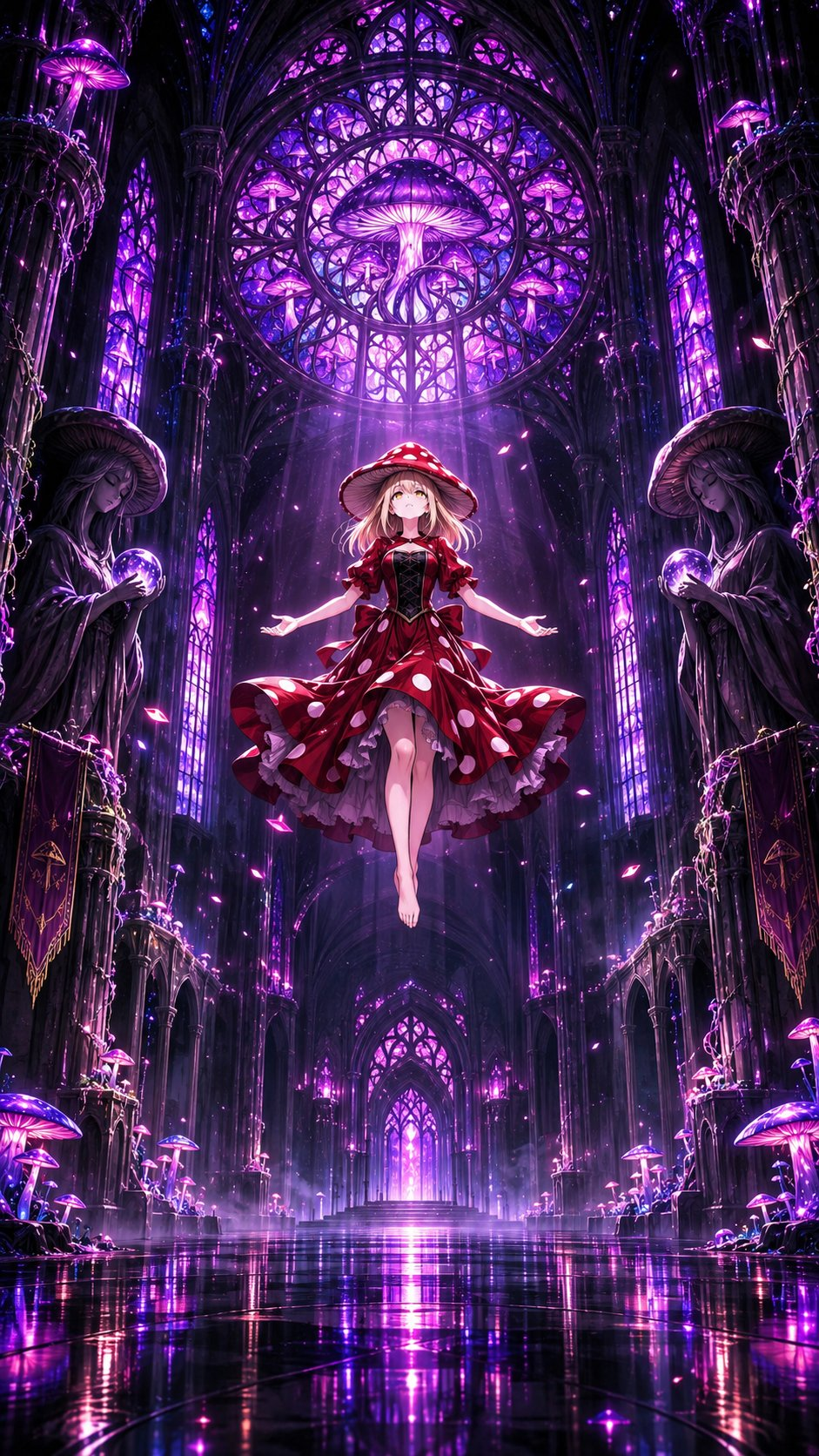
02 EXAMPLESTwo characters, two sanctuaries built around their own visual identity. Both images are shown uncropped; select either to view the original at full size.
BEFORE YOU CREATE
START WITH YOUR CHARACTER SHEET.
- Attach one character sheet. It defines the character’s exact appearance, colors, accessories, and symbolic motifs.
- Copy the complete prompt. Paste it alongside the sheet. No other reference image is required.
- Create the sanctuary. Keep the character distant, centered, and levitating while the architecture and supernatural lighting respond to their identity.
THE COMPLETE PROMPT
ORIGINAL TEMPLATEYour supplied wording is preserved in full, including character fidelity, architecture, aura, and lighting instructions.
Read the complete prompt
UNIVERSAL CHARACTER ASCENDANCE

ABSOLUTE CHARACTER LOCK • OVERWHELMING SUPERNATURAL AURA • MONUMENTAL DARK ANIME • VERTICAL 9:16

CORE DIRECTIVE

Create ONE visually overwhelming, hauntingly beautiful, vertical 9:16 dark anime masterpiece depicting the character from the supplied CHARACTER SHEET levitating in the center of an impossibly vast, cathedral like sanctuary.

This is not a portrait of a character inside a building.

This is the visual manifestation of the character’s presence, as though reality itself has constructed a monument around their existence.

The character should radiate an indescribable aura of significance, power, mystery, and supernatural authority.

The atmosphere should feel sacred without necessarily being holy, terrifying without necessarily being evil, and beautiful without feeling welcoming.

The viewer should feel as though they have stumbled into the presence of something they were never meant to witness.

The character sheet is the absolute authority for identity, appearance, colors, symbolism, and thematic inspiration.

Never reference or require another image.

⸻

1. ABSOLUTE CHARACTER FIDELITY

Reproduce the supplied character with maximum visual accuracy.

Preserve their exact face, hair, eyes, physique, clothing, accessories, colors, markings, silhouette, and identifying features.

No redesigns. No invented costume elements. No generic fantasy replacements.

The character must remain immediately recognizable.

Their supernatural presence must come from the composition, atmosphere, and environmental reaction, not from changing their established design.

⸻

2. THE AURA — THE MOST IMPORTANT ELEMENT

The character must possess an overwhelming, almost indescribable supernatural presence.

Do not interpret aura as a simple glowing outline, colored fire, or generic energy effect.

Instead, communicate aura through the entire environment.

The character’s presence should seem to:

* Bend the atmosphere around their body.
* Draw suspended particles into subtle orbital patterns.
* Cause distant architectural details to dissolve into shadow.
* Create a profound stillness throughout the sanctuary.
* Distort the light passing behind their silhouette.
* Make the surrounding architecture feel impossibly monumental.
* Generate the impression of an invisible gravitational field.
* Transform the entire environment into an extension of their identity.

The aura should be felt before it is consciously noticed.

Visual aura hierarchy

Immediate aura:

A restrained, razor thin rim of character derived illumination separates the silhouette from the darkness. Very subtle atmospheric distortion surrounds the figure.

Midrange aura:

Tiny suspended particles, faint luminous fragments, and delicate atmospheric currents gather around the character in sparse, irregular formations.

Environmental aura:

The enormous windows, distant architecture, atmospheric haze, and reflective floor respond to the character’s presence through coordinated lighting and symbolic repetition.

Psychological aura:

The figure remains almost unnaturally calm amid an environment of impossible scale and supernatural tension.

Their stillness is what makes them intimidating.

The character should look effortlessly powerful, never like they are struggling to demonstrate power.

⸻

3. MONUMENTAL ARCHITECTURE — A TEMPLE TO THEIR EXISTENCE

Create a towering, impossibly tall gothic sanctuary extending far beyond the visible frame.

The structure must feel ancient, oppressive, mysterious, and overwhelming.

Essential architectural elements:

* Colossal vertical columns disappearing into blackness.
* Repeating gothic arches that create extraordinary depth.
* A massive circular ornamental window dominating the upper composition.
* Tall, narrow windows embedded within dark structural walls.
* A long central aisle leading toward an illuminated distant chamber.
* Monumental shadowed figures positioned along both sides.
* An enormous vaulted ceiling barely visible through darkness.
* Intricate architectural details revealed selectively by supernatural illumination.
* A glossy, nearly black floor catching fractured reflections.

The scale must be intimidating

The character should appear comparatively small against the architecture, occupying approximately 30% of the image height.

The environment should tower over them by an almost absurd degree.

Yet the character must remain the undeniable focal point.

The architecture is physically larger. The character is spiritually larger.

Use strict bilateral symmetry, powerful vertical lines, and deep one point perspective.

The sanctuary should feel like a place that exists outside ordinary reality.

⸻

4. THE CHARACTER — ABSOLUTE STILLNESS

Position the character suspended in midair along the exact central axis.

Pose:

* Upright, relaxed body.
* Head slightly raised or facing forward.
* Arms loosely extended away from the torso.
* Hands naturally open, palms subtly outward or upward.
* Legs hanging straight or close together.
* Feet suspended above the distant floor.
* Hair and loose clothing barely moving in an invisible current.

Avoid aggressive combat stances, exaggerated gestures, or theatrical expressions.

The character should appear entirely comfortable with the impossible.

Their expression should reflect their established personality, but the overall presentation should communicate absolute composure.

The more motionless the character appears, the more powerful their aura should feel.

⸻

5. CHARACTER DERIVED COLOR AND SYMBOLISM

Analyze the supplied character sheet and extract its most distinctive visual characteristics.

Determine:

* Dominant outfit color.
* Strongest accent color.
* Secondary complementary tone.
* Recurring patterns and symbols.
* Character associated motifs.
* Material and aesthetic influences.
* Emotional qualities suggested by the design.

Use this information to construct the sanctuary’s visual identity.

Color philosophy

The image must be overwhelmingly dark.

Approximately 75–85% of the composition should consist of black, near black, and extremely deep character derived shadow tones.

The remaining illumination should be concentrated into carefully controlled, intensely saturated accents.

The darkness must dominate. The color must feel like it is bleeding through the darkness.

The character’s strongest identifiable accent color should become the sanctuary’s principal supernatural light source.

The color must appear in:

* The enormous circular window.
* Tall decorative windows.
* Distant architectural openings.
* Subtle atmospheric particles.
* Fine architectural seams.
* Fractured reflections on the floor.
* Selective rim lighting around the character.

Avoid multicolored fantasy lighting, rainbow gradients, and excessive secondary hues.

Symbolic architecture

Every decorative element must be inspired by the character sheet.

Translate recognizable visual motifs into architectural ornamentation.

Examples of possible transformations:

* Clothing patterns become ornamental window tracery.
* Metallic accessories inspire structural detailing.
* Natural motifs inspire carved organic patterns.
* Technological features inspire intricate mechanical ornamentation.
* Distinctive symbols become monumental architectural emblems.

These are possibilities, not mandatory decorations.

Never default to crosses, skulls, wings, halos, flames, or occult symbols unless justified by the character.

The result must feel deeply personalized.

⸻

6. THE GREAT WINDOW — SUPERNATURAL FOCAL POINT

Position an enormous circular ornamental window high above the character.

It should dominate the upper architectural composition.

The window must feel like an ancient, intricate, supernatural mechanism rather than an ordinary stained glass window.

Construct its design from the character’s visual symbolism.

Use:

* Dense geometric tracery.
* Intricate radial patterns.
* Layered ornamental structures.
* Fractured or weathered translucent surfaces.
* Fine dark structural divisions.
* Uneven patches of saturated illumination.
* Deep black segments interrupting the light.

The window should emit a powerful but controlled character derived glow.

It should resemble a distant supernatural sun imprisoned within the architecture.

The illumination should feel ominous and atmospheric, not cheerful or heavenly.

⸻

7. MONUMENTAL GUARDIANS AND SHADOW FIGURES

Along both sides of the lower sanctuary, position enormous, dark sculptural figures.

These may be guardians, statues, ceremonial sentinels, or abstract monuments depending on the character’s visual identity.

They must feel ancient and imposing.

Keep their details partially concealed in darkness.

Only reveal select contours through faint reflected illumination.

They should reinforce the idea that this sanctuary exists to acknowledge the central figure.

They must never compete with the character for visual attention.

⸻

8. SUPERNATURAL ATMOSPHERIC DEPTH

Create an environment saturated with darkness and atmospheric tension.

Use:

* Dense, layered environmental shadows.
* Fine floating dust and suspended particles.
* Subtle volumetric light shafts.
* Thin low lying mist around the floor.
* Atmospheric haze between distant architectural layers.
* Sparse luminous fragments drifting through the central space.
* Extremely subtle optical distortion near the character.
* Selective light bloom around the brightest windows.
* Deep reflections interrupted by darkness.
* Almost imperceptible environmental motion.

The atmosphere should feel heavy, silent, and charged.

Avoid excessive smoke, obvious magic circles, lightning, fireballs, or swirling energy tornadoes.

The supernatural should feel inevitable rather than theatrical.

⸻

9. DARK CINEMATIC ANIME RENDERING

Premium dark fantasy anime key visual.

Stylistic qualities:

* Sophisticated semi realistic anime anatomy.
* Refined facial detail.
* Heavy cel shaded character rendering.
* Precise silhouette construction.
* Dense architectural linework.
* Extremely deep black values.
* Selective saturated illumination.
* Rich environmental texture.
* Painterly atmospheric depth.
* Fine film grain.
* Subtle chromatic light diffusion.
* Dramatic tonal separation.
* Sharp focal detail against soft distant architecture.
* Highly controlled contrast.
* Haunting cinematic composition.

The artwork should resemble an iconic final frame from a supernatural anime, the moment an overwhelmingly powerful presence reveals itself without saying a word.

Avoid generic fantasy wallpaper aesthetics.

Avoid overly clean digital rendering.

Preserve organic texture, visual imperfections, and the oppressive beauty of darkness.

⸻

10. CAMERA, SCALE, AND COMPOSITION

Aspect ratio: 9:16 vertical.

Camera: Distant, perfectly centered, symmetrical architectural establishing shot.

Perspective: Deep one point perspective.

Character placement: Exact horizontal center, slightly above the vertical midpoint.

Character scale: Approximately 28–33% of total image height.

Upper composition: Immense glowing circular window, oppressive towering architecture, shadowed ceiling.

Middle composition: The levitating character, framed by cathedral columns and narrow illuminated windows.

Lower composition: Monumental guardians, distant altar or gateway, dark reflective floor, sparse atmospheric haze.

Maintain considerable negative space around the character.

The environment should appear far too large to exist in ordinary reality.

Do not zoom in.

Do not allow the character to occupy most of the canvas.

Do not introduce dramatic camera tilts or asymmetrical framing.

The symmetrical stillness is essential to the atmosphere.

⸻

11. THE FINAL EMOTIONAL EFFECT

The finished illustration must evoke:

Awe. Dread. Reverence. Isolation. Mystery. Transcendence. Absolute presence.

The viewer should feel the weight of an enormous, silent space.

The character should seem to command the entire environment without moving a muscle.

The architecture should appear to have been built around their identity.

The lighting should feel like a supernatural phenomenon rather than ordinary illumination.

The color palette must feel inseparable from the character.

The symbolism must feel deliberate rather than randomly decorative.

The entire image should communicate the unsettling sensation of standing before something profoundly significant.

Not a character showing off their power.

A character whose existence is the power.

⸻

NEGATIVE PROMPT

Generic fantasy cathedral, bright cheerful lighting, random religious imagery, excessive glowing outlines, obvious energy explosions, lightning storms, flames without thematic justification, magical circles, arbitrary decorations, colorful stained glass, rainbow illumination, crowded composition, oversized character, closeup portrait, action pose, dramatic camera tilt, cartoon proportions, inaccurate character design, identity drift, altered clothing, extra accessories, duplicate characters, blurry face, washed out shadows, excessive bloom, flat architecture, generic statues, artificial symmetry errors, text, logos, watermarks, borders.

⸻

FINAL GENERATION COMMAND

Study the supplied character sheet.

Extract the character’s visual identity, defining colors, symbolic motifs, and emotional presence.

Translate those characteristics into a monumental, deeply personalized supernatural sanctuary.

Preserve the exact character design.

Maintain the distant, symmetrical, vertical cathedral composition.

Make the darkness oppressive, the lighting extraordinary, the architecture impossibly vast, and the character’s aura overwhelming.

The sanctuary should not merely contain the character. It should feel as though the entire structure exists because the character does.

Generate the finished illustration immediately.